

WSLT:
So Garrett, you’re mainly known as a magician, but from what I’ve seen you’re also a skilled manipulator. You handle cards, Rubik’s cubes, contact juggling balls, rings, and even begleri. What would you say is the key to entertaining an audience with skill?
GT:
Humility is probably the biggest thing. You’re doing something really impressive. To act anything but humble is going to come off as show-offy and basically it looks like you have not matured and you still need to prove something. You look childish. Especially, the older you get, the more this is gonna ring true because it should have been something you grew out of. You don’t need other people’s validation. So, presenting it with humility.
If you think about magician/comedian Steve Martin, today he is one of the best banjo players in the world. And in his act, he treated the banjo like, “well, I’m going to mess around with this little thing… I don’t know if you like this sort of thing.” And then it’s some of the craziest banjo music you’ve seen. But he acts like he doesn’t even know it’s good. And so I love when I see those similar things. But I think those are the times it resonates with an audience: when they see you as a normal person that could do something, but you’re kind of oblivious to it, is one sort of character that leans into a humility where it’s not that you’re trying to say you’re better than anyone else. You’re not trying to even go, “look what I can do.” It shouldn’t be for yourself. It should be for them, the aesthetics and the dance of it all.
WSLT:
Is there something that you experienced, like a lesson that you learned personally that led you to that conclusion, or were you told it by somebody? Like, how did you come to that idea, that humility is the way to connect with audiences through skill?
GT:
When I’m performing, I’m very sensitive to the audience and I can just feel that that’s the way to go. But like I said, it does depends on your character and how old you are. Like when I was a kid, I used to do an effect at the end of my show, I blindfolded myself and then I put the deck in order after it was shuffled. And I got a standing ovation for this back when I was 17, 18. They loved this.
But when I started turning 21 and 22, the same thing didn’t get a reaction and it really seemed like I was just showing off because I wasn’t 14 and I wasn’t a kid. So it’s like, they come to see a 23-year-old because they expect they can do that. They’re not amazed by that anymore because obviously it’s what you’re doing for a living. Obviously you’re good. And that happens the older and older you get – the more they expect quality until you get past a certain point. But yeah, I would say that I looked at the situation and I realized that I needed to not know what I was doing and I needed to make it so that I wasn’t even focused on that. So I changed the routine to now be: I find every card in the deck in order except your card.
So they pick a card and I can’t find it. “If you had said the ace of hearts, I would have found that. And two of hearts, I would found that. But I can’t find your seven of clubs. If you had said three of hearts…” Bang, bang.
And now I’m putting the cards in order and I shuffle the rest of the deck and now they’re all in order. And the one card I can’t find is the seven of clubs. By flipping the motivation, I’m not even pointing out that the cards are in order anymore. It’s just, look, there’s the eights, there’s the two, I can’t find the seven of clubs and I’m struggling with this, I don’t know, where’s that seven of clubs? Here’s all the hearts, here’s all the spades, here’s all the clubs except the seven.
It created an innocence because I was unaware that that’s more impressive than a vanishing card. A card that just disappears – they like that. But this is 51 cards in order. It feels a little more impressive, so by me focusing on this lesser thing, it kind of gave me permission now to still do the trick that I liked.
WSLT:
I love that. My next question is, out of all the other mediums out there, what makes cards special in particular?
GT:
It used to be the cup and ball that we would judge a magician by. Whoever handled the cups and balls the best was the best. And why? Why did we judge a magician through the cups and balls? Well, when it comes to physical material magic, the most simple, elegant thing would be a cup and a ball. Because with those things, you can vanish things, you can make things appear, they can jump from place to place, they can change into something else, they can be in a mysterious state under the cup, they could be put on top of the pillar on the top of the cup. All these different things can be done with a cup and a ball. And that’s why magicians were judged by a cup and a ball, but somewhere it changed and it became playing cards.
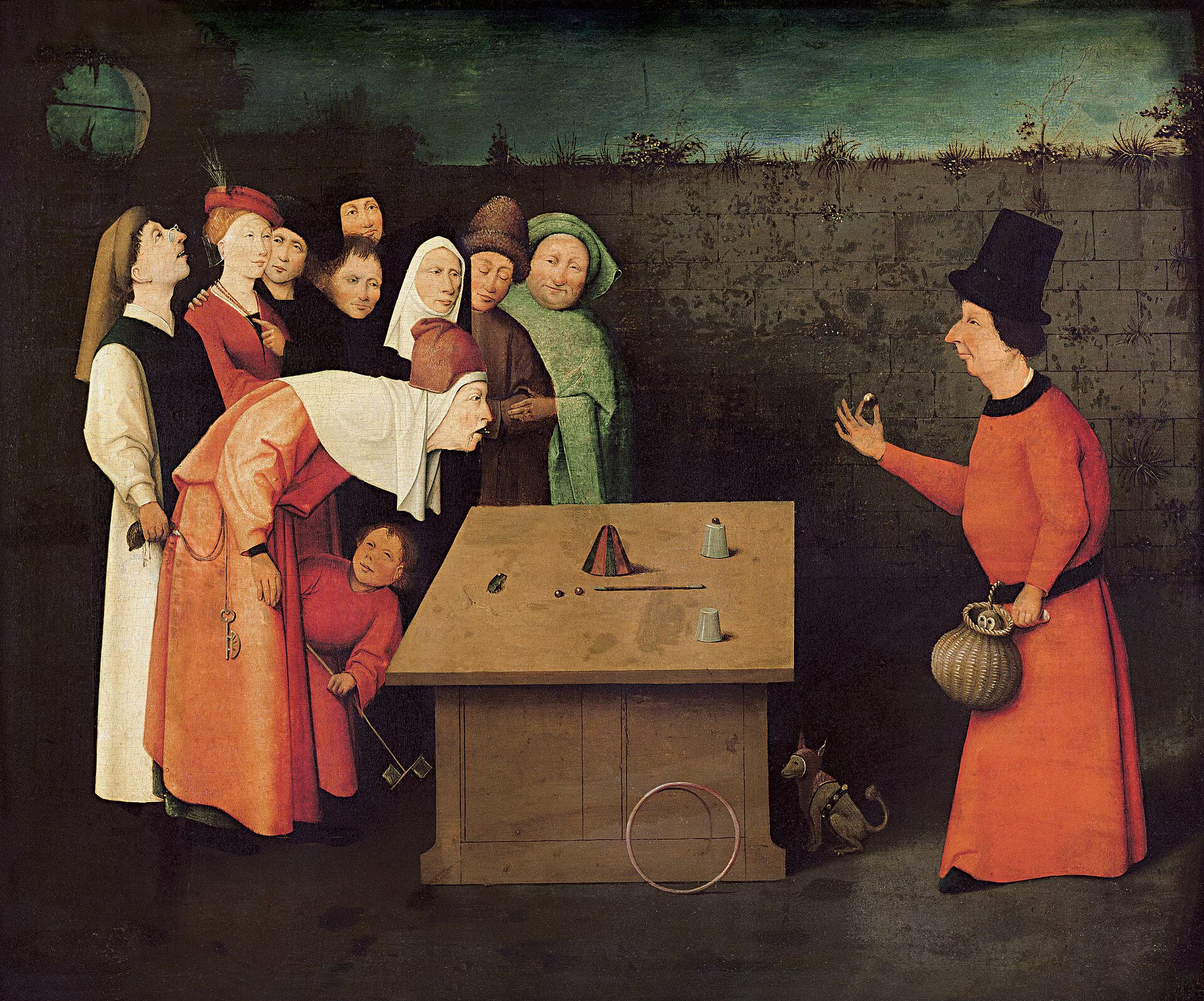
And that’s because magicians and audiences grew more intellectual and they started doing magic with thought, and magic with ideas, and magic with concepts like numbers and shapes. So unless you had, you know, multiple colored balls, you can’t say, “pick a ball”, and “remember it and hold that”. The cards have all the tricks you can do with a cup and ball.
The fact that a ball can be under a cup in a mysterious state… a card face-down is a mysterious state. It represents power, money, gambling and games, and then when you start thinking about tarot cards, it has a whole meaning of life in it. The fact that the deck is like a calendar and all those examples magicians say, all that creates this meaning and then you are juggling this symbol of life and death and time and space and all of that.
It’s this thing that people enjoy because they have these fixed ideas about it that come from all different directions. They could be thinking about gambling, they could be thinking about games, they could be thinking about magic itself, they could be thinking about the symbolic meaning like tarot cards, and you juggling those things, it connects to all those different people at the same time. So there’s a lot of symbolism.
I think the only object that I think has more symbolism than a deck of cards would be a ring. That’s why I chose ring magic for a lot of my manipulation stuff. It’s because a ring represents money, power, love, status, wealth… everyone has a ring, your promises are made with a ring, the Masons have a ring, the pope has a ring… you have all these symbols in it organically and then you are manipulating that. Cards are more versatile because you can do different types of effects with it, but if you want to go for like emotion and what people connect with, they would connect with a ring just as much as a deck of cards.
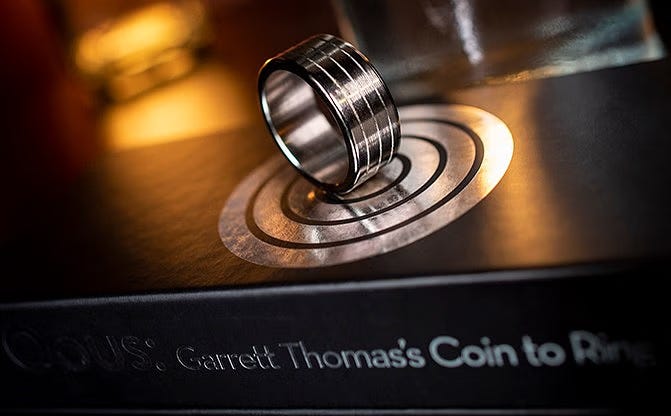
But the cards then take over because there’s so many more options you can do with it. You can do math, you can do gambling demonstrations, even just the idea that you can isolate something without too much ritual. When it comes to cards, magicians have gravitated to it because of its metaphor, symbolism and the amount of things that people attribute to it. They don’t know whether to run over and watch you or run away because you’re going to con them out of money. Just seeing a person with a deck of cards can elicit some sort of response.
WSLT:
That’s very true. My next question is: back in the day, people who did a lot of skill-based sleights and flourishes in our community were known as ‘move monkeys’. What do you think is the draw of being a move monkey and what is the importance of these people?
GT:
I mean, the draw is sport, skill and who can push the boundaries of the human body. It’s like saying, what’s the point of doing that? What’s the point of throwing a ball into a hole? It’s all about skill. And the negative connotation that the world of magic put onto it as ‘move monkey’, it doesn’t really clearly define their argument. They do moves.
You know, they did coin rolls. They did coin stars, all these guys that were like, “that’s just showing off your skill.” Why do you do a coin roll? Why do you do that five-pointed coin balance star finger trick? Right? And then to look at flourishing and go, “that’s too much.” It would be too much to do a flourish while your character is suggesting that you don’t know a lot about cards. But if you structure it right, you can do flourishes and then have a little pattern-interrupt and then do a Lennart Green-style performance and nobody would be like, “wait a minute, he could bounce the card off of his foot!”
It has to be an artistic decision. You gotta be careful how you do it. But you can definitely do something advanced and then clearly present that the card is lost in the deck and you really don’t know where it is. It’s a little more of a challenge when you put it next to advanced things, but it’s definitely possible.
WSLT:
Great. I only have one more question for you, and this one’s kind of a two-in-one. Firstly, what do you think most magicians need to understand about cardistry and cardists?
GT:
The number one thing is to know that cardistry is magic. Juggling was magic. If you go back in time, they thought it was only demon-possessed people that could have that much skill. You’re balancing an egg on a stick and it’s like, these were considered magic from the public.
But cooking is magic, and acting is magic. Robert Houdin, I think, got it backwards. Magicians are not actors. Actors are magicians. They’re shape-shifters. Magicians are using acting. They don’t do it well, but they use acting.
So the magician has a tool that’s called acting because it’s acting while you’re doing mime, while you’re presenting…you got a lot of different art forms happening at the same time. You’re doing some sort of juggling or method or math, covering all that with mime, pretending to do something else and then creating a character.
So saying a magician is an actor is like saying a carpenter is a hammer. It’s a tool we use. But to say that an actor is a magician, well, yeah, the art of acting totally encompasses the idea of shape-shifting and becoming something else. So I think the magic world has missed an opportunity to celebrate all the magical arts.
To me, some of the most obvious ones are puppetry and ventriloquism. It is clearly the act of ventriloquism and puppetry that brings these objects, these inanimate objects to life. And that is an act of magic to do that.
So when demonstrating something skill-based, if you want to get reaction out of it, you can attribute the skill to magic. Just changing your point of view to realize that magic is so much bigger than your coin tricks and card tricks. That magic is a part of all art, that there’s a magical element to any art form. And to not have an opportunity to celebrate those things within the industry of magic is weird.
So cardistry should be the one that opens the door to all these other art forms that are a different form of magic.
WSLT:
Great. Conversely, is there something that cardists need to understand more about magic and magicians?
GT:
Most cardists I meet get what magic is. It’s magicians that don’t get what they are. The problem has always been one-sided. It’s just the magicians that are holding on to tradition that want to fight for no reason. So cardists should not take it personally.
I think should realize that these people are stuck in their ways. And it’s not always older people. If you’re a person that’s on your phone all the time, 24/7 – if I took your phone away, it would upset you because we are pattern-recognizing people. So people that think magic should be done a certain way, are people that still need validation for their own magic. Because what they’re really saying is: if you change magic, then I need to change because I’m wrong.
WSLT:
Right.
GT:
Right? So they try to convince everybody that their way is the right way. Because if everybody convinces or agrees with them, now they’re convinced that they was doing the right thing. But the truth is, it’s an expressive art form. There’s no right or wrong thing. It’s just, can you find an audience that you want? So I don’t really think there’s much to say because there are no rules.
We now have a world where we can pretty much do and write anything. It’s just a matter of cost. Do we want to fly to Jupiter? Yeah, we can do it. It’s just a matter of cost. Can we afford it? What is it worth? We can do anything.
There’s no theater for Cardistry yet. There’s no framework. Audiences don’t really know how to view it. So you have this opportunity to educate what that type of show would be. And whether it stays a small close-up thing or it can be played bigger… will people recognize a deck of cards in a different environment?
You know, that’s one of the symbols of a deck of cards: it’s something they play with in their hands. You now see manipulators just using white pieces of plastic and they’re not even cards anymore.
WSLT:
Yeah. Rectangles.
GT:
And it looks great and nobody cares because there are no rules. So, you know, there’s no wrong or right way. Just be honest with yourself about what new messages it’s creating because you’re taking a different path.
The key to me is that you always have an answer for yourself.
For example, why do I use a blue deck over a red deck?
Well, for the same reasons everyone uses red decks, I use blue. They say that red decks are more friendly and are brighter and that the brighter color gets people to pull their eyes to the cards. And those are all to me, the arguments for it. And still to this day, magic shops sell two-to-one red to blue because red products do stick out because red makes you buy stuff.
But when it comes to magic, blue is a better color for a deck of cards. Darker is better. Why? Because magic is not a friendly art. We’re going to mess with you. I don’t want you to look at the cards because they’re bright. I want you to look at the cards because I tell you to look at the cards and everything else should be about you and me. It should be about connection.
And so I use a blue deck because it’s calmer, it’s cooler, it doesn’t draw attention to it when I don’t want there to be attention to it, yet I can focus on it myself. Now does that actually work? I don’t know. Like, do I notice a difference when I use a red deck of cards with my audience? No. But I create an artistic reason.
Okay, I created a reason that makes why I use a blue deck meaningful. And so one of the best things to do, especially when you’re in an art form that has not been legalized yet – and that’s a music industry term – is to train the audience how to be entertained by it.
I talked with this record producer who had produced The Beatles, and they said as soon as they got to America they hired girls to scream and run up to the front.
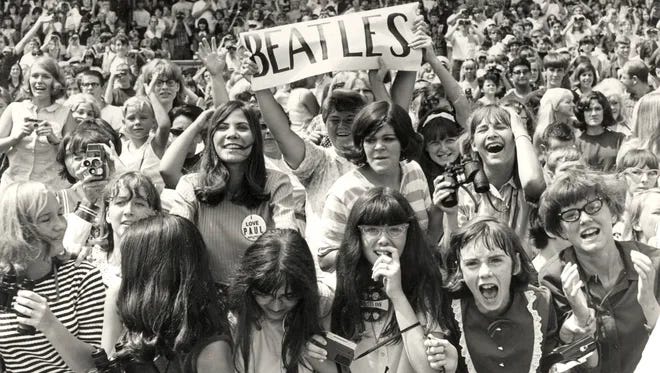
And they said “we did that for two shows, and everyone’s been doing it ever since for rock shows.” So the audience has been trained how to watch a rock show. You know, if you’re at a rock show, it’s okay to scream and interact. But if you were at an orchestra, you know to not make a noise. And you wouldn’t even clap until the conductor turns around. These are things that we all know intuitively now because of the ritual of those things.
Presenting cardistry is a new art. So is it just an online thing? Is it going to be on stage? The answer could be yes. It’s whatever you want right now because it hasn’t been locked in where an audience knows.
So in that same spirit, cardistry and manipulation and things like that… as a separate presentation, if you present it with magic then traditional magic theater is gonna be fine, but if you want to present it as something new, you want to educate your audience on what they’re going to be experiencing and why.
And that’s the key, is the ‘why’.
Going back to the humility, for an egotistical person, the ‘why’ is, “because I can and you should be impressed with me.” The humble person can add a different ‘why’. Where the focus is not about “look what I can do,” but it could be about this story or this idea. And this thing you can do is just a side note.
But then you can also find a balance between those two, where you are presenting “look what I can do,” but you also have something about you that creates a connection with your audience and something that people want to see that you can do.
So because you’re a blank slate, as long as you can communicate to an audience what they’re going to experience before it happens, I think you’ll have success.
About the interviewee, Garrett Thomas:
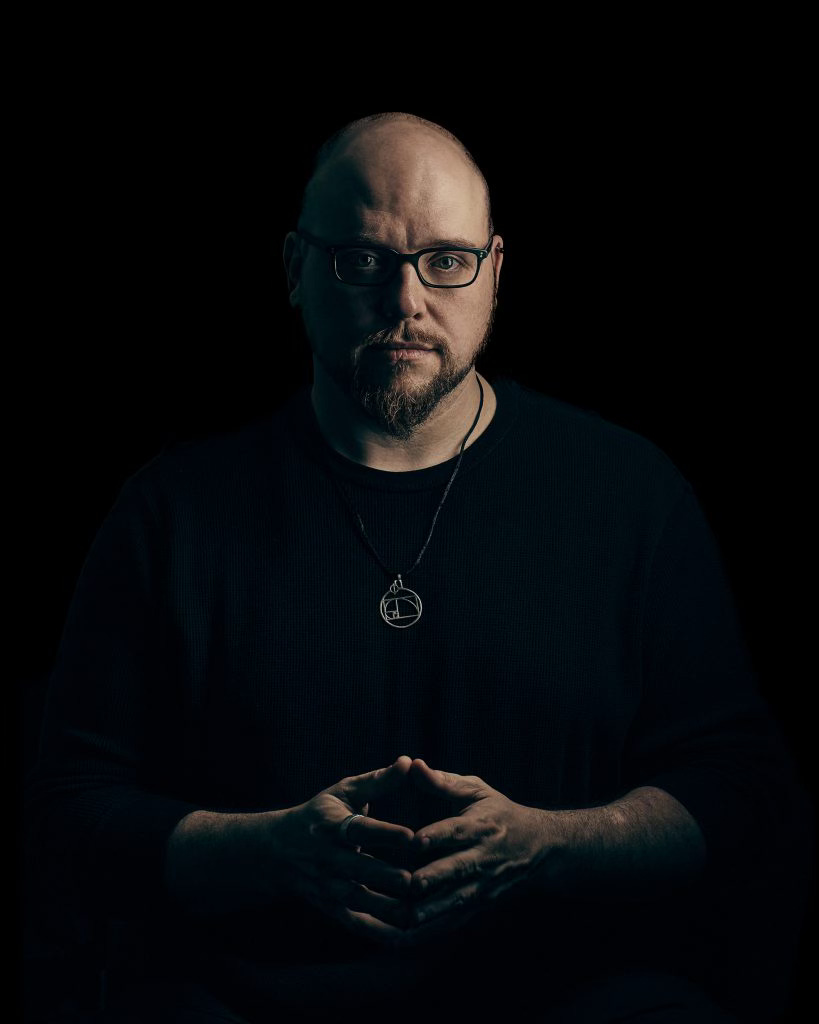
Garrett Thomas is a conversational magician, writer, inventor, creator, and philosopher. In 2020, he won the top prize on the TV show Penn & Teller: Fool Us. Follow him on Instagram @gtmagician