

I. Introduction
What exactly is cardistry? This question has challenged cardists throughout history, across cultures and within the community. The answer allows a variety of interpretations depending on the individual’s perspective. In the following essay, I will present my answer in a logical and constructive manner.
Just a note: parts of this essay may prove abstract and intricate, so it might help to refer to the diagrams as you read.
II. Understanding Human Consciousness
To begin with, I define cardistry as the art form of symbolising human aesthetic consciousness within time and space through cards. That is because each cardistry move shows the two things at the same time:
Temporality (T): because of the manipulation of cards by human hands
Spatiality (S): because of the physical existence of cards
In short, cardistry is about representing the beauty of cards in T and S.
To understand that more deeply, we need to think more about human consciousness — how we experience T and S. I propose describing it with two new terms:
Dispersion (D): a spread-out or extended state of consciousness
Concentration (Cc): a focused or narrowed state of consciousness
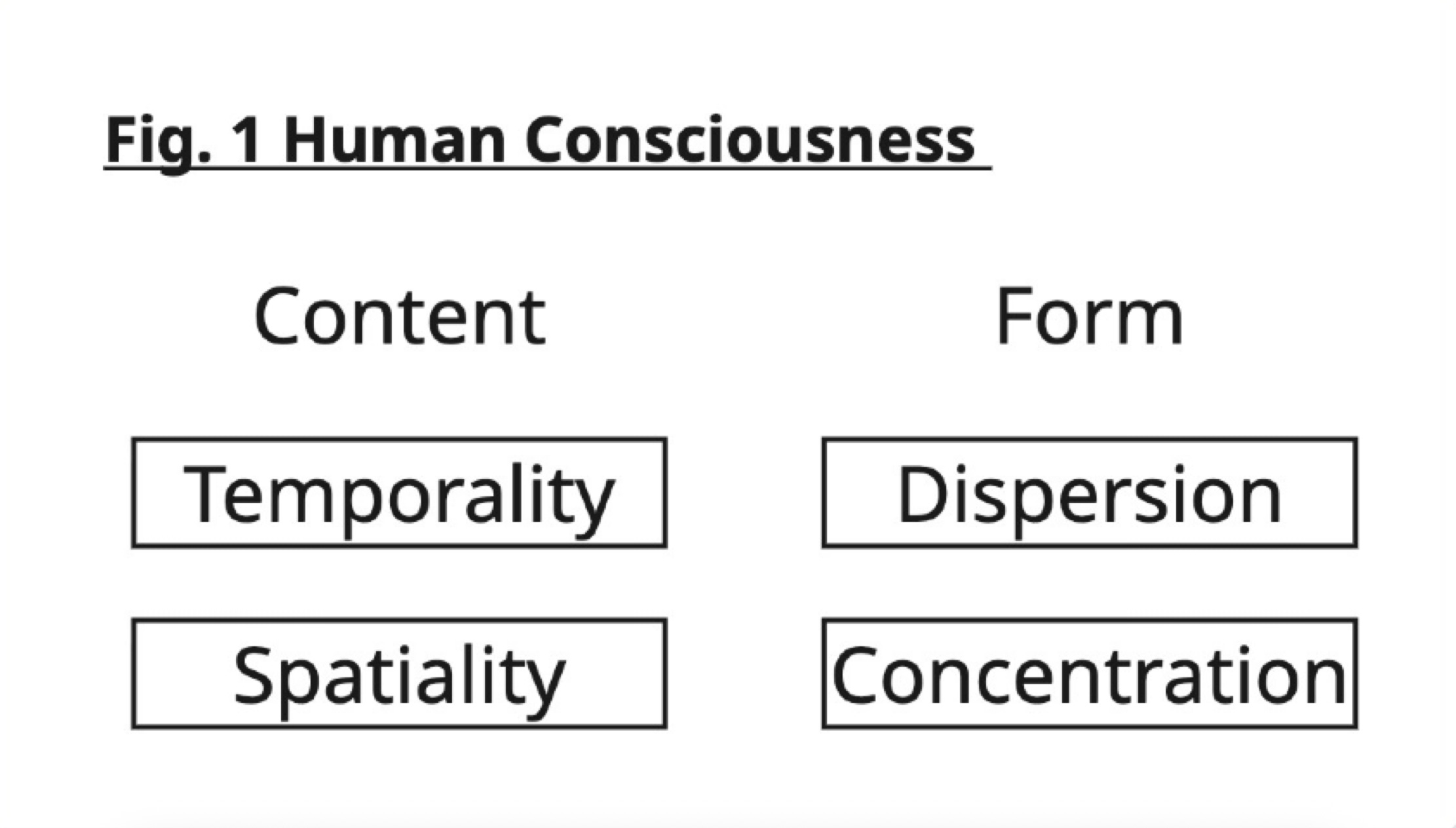
Also, we could think of consciousness as having content (T and S) and form (D and Cc). Figure 1 shows this perspective.
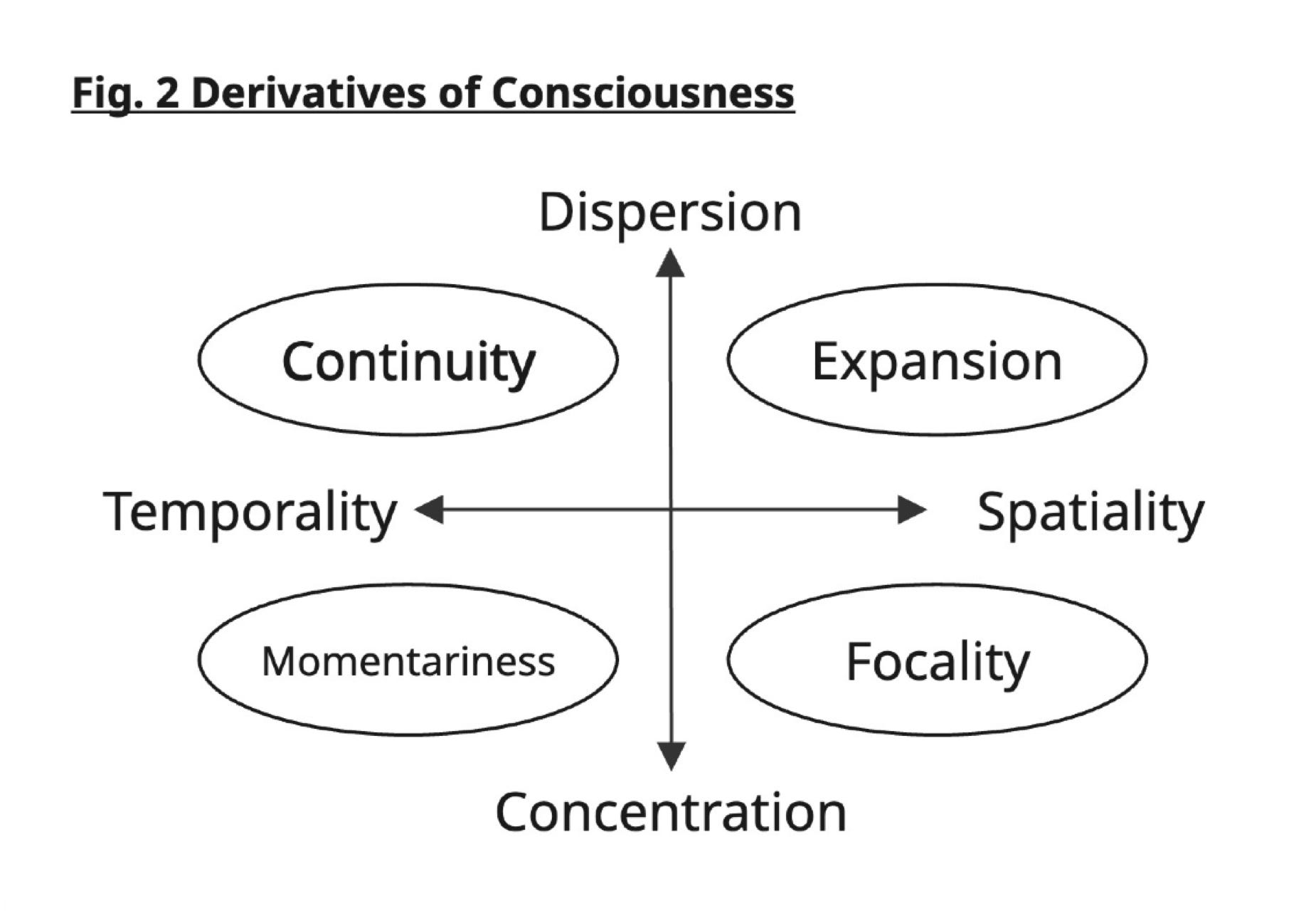
From these ideas, we can expect four basic kinds of consciousness (Fig. 2):
Continuity (Ct): T×D, moving on over time
Momentariness (M): T×Cc, centred on a single moment
Expansion (E): S×D, spreading across space
Focality (F): S×Cc, focused at a single spot
A further explanation regarding Ct might be necessary. If we assume T in its simplest form — past, present and future — the consciousness of an object originates from the present. It, then, disperses to reach the past and future, which are not immediately before us, and links the past, present and future. That is how Ct arises within our consciousness.
III. Four Core Concepts in Cardistry
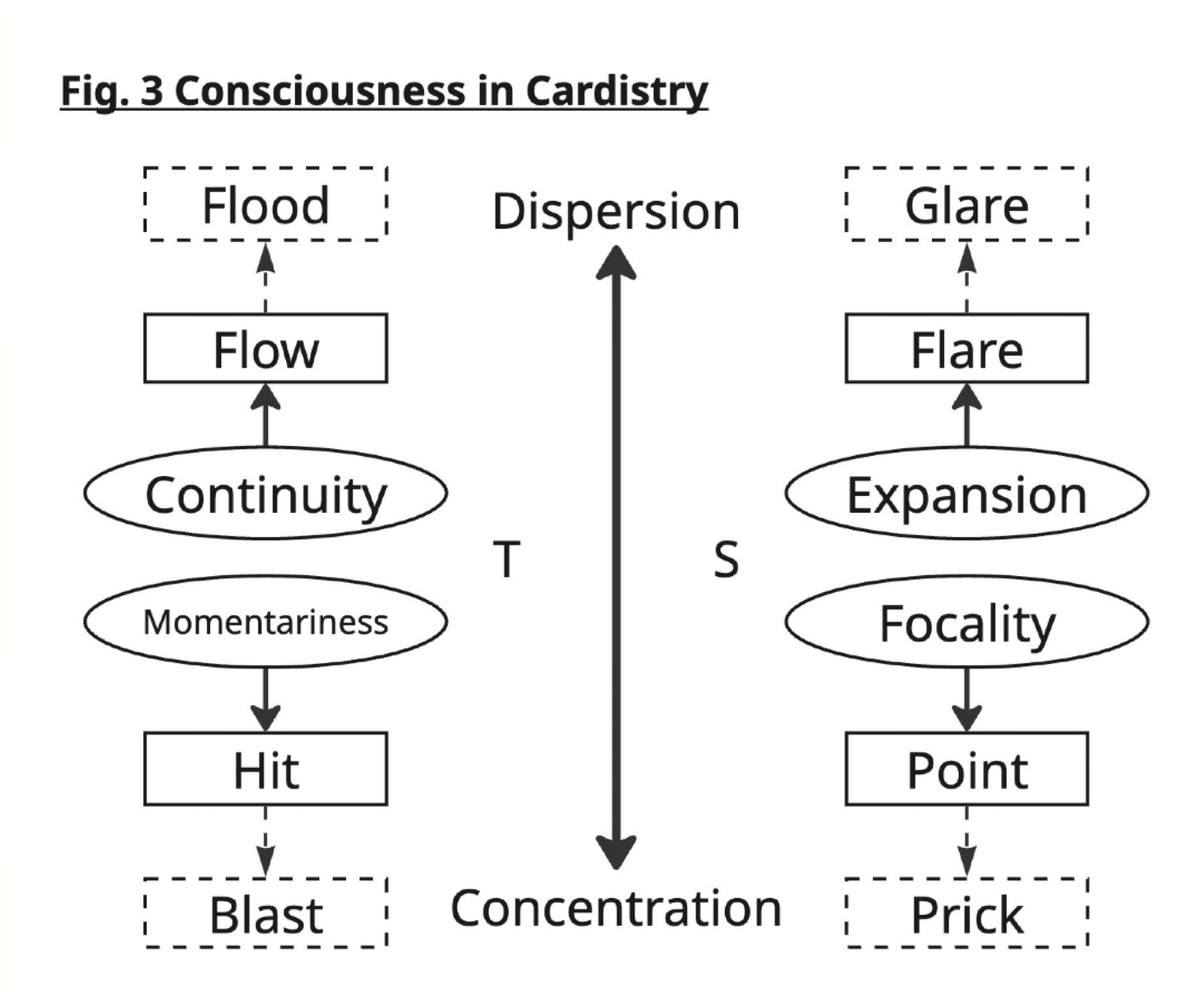
Now that we have broken down our consciousness, let us apply it to cardistry. Each kind of consciousness (Ct, M, E and F) could be represented through how we move cards. I use both familiar and new terms to describe these states:
Flow: Ct (T×D), fluid movement unfolding over T
Hit: M (T×Cc), sharp movement executed instantly at a moment in T
Flare: E (S×D), expansive motion using open S
Point: F (S×Cc), precise motion converging into one spot in S
You likely already know what Flow and Flare refer to. The term Hit comes from dance, where it means a momentary force of muscle. The idea of Point originates in the French ballet term ‘Pointe’, for the toe-standing position where all balance concentrates at a single precise spot.
Furthermore, ‘Flood/Blast/Glare/Prick’ are defined as the states where each of ‘Flow/Hit/Flare/Point’ becomes excessive in D or Cc (conscious form), or turns negative. Figure 3 shows this diagram.
For instance:
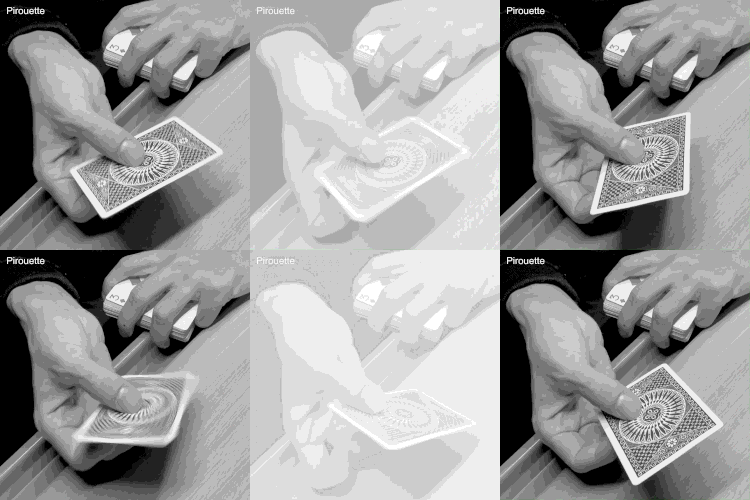
Pirouette concentrates in both T and S — it has Hit and Point.
Padiddle disperses in T but concentrates in S — it has Flow and Point.
Here is an important point: unlike music (which is mostly temporal) or sculpture (which is mostly spatial), cardistry always involves both T and S; a state symbolising only T implies the cards do not exist as physical objects, while only S suggests human hands do not manipulate the cards.
Additionally, the qualities which Hit (T×Cc) and Point (S×Cc) embody seem to have been mentioned less frequently in this field, compared to Flow (T×D) and Flare (S×D). This relative rarity might be because Cc often comes into existence in forms that need more subtle attention or less complex techniques, on account of its very nature.
Thus, cardists practice and create moves day and night to embody the four types of consciousness beautifully through cards.
IV. Symbolized Consciousness in Cardistry
In cardistry, the aesthetic consciousness of T and S is represented simultaneously through the cards. Here, I define the combination of T and S by cards as ‘Touch’. Each Touch combines one T element (Flow/Hit) with one S element (Flare/Point). This would give us four categories of Touch (Fig. 4).
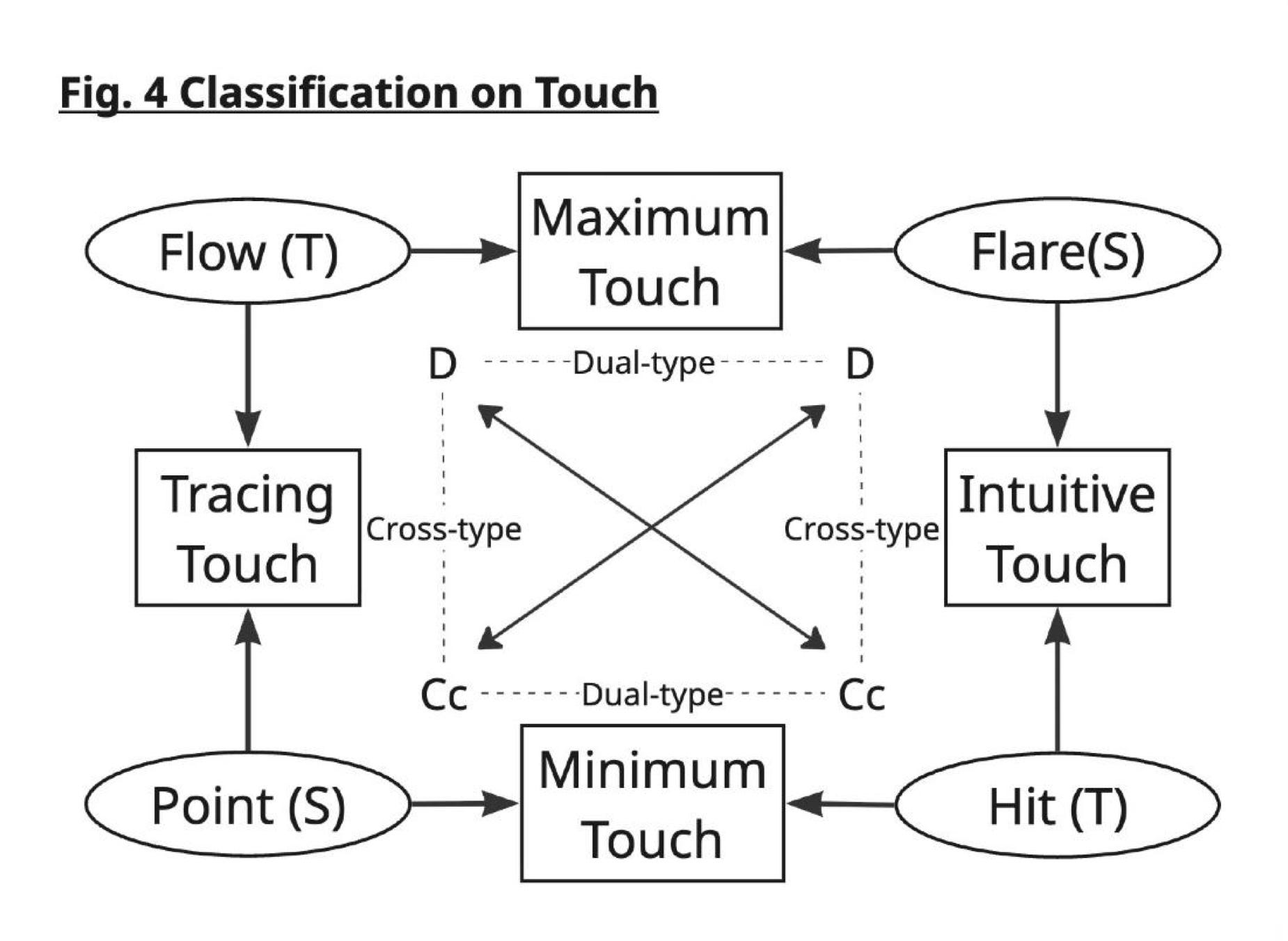
First, we could assume Dual-Type Touch, which takes the form D×D or Cc×Cc.
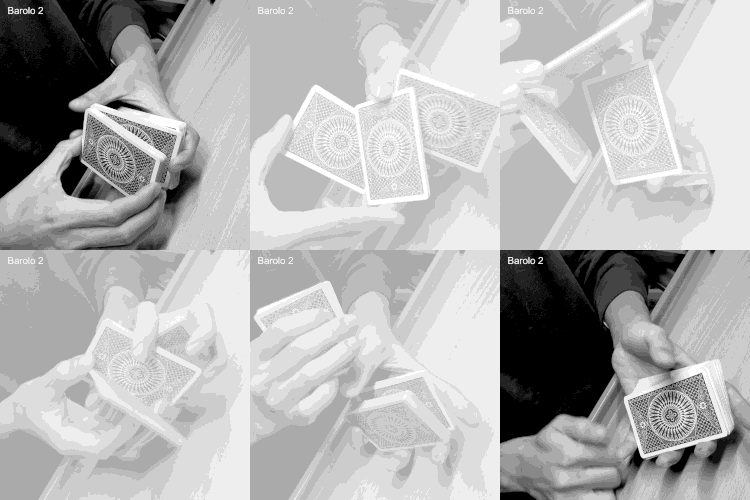
Maximum Touch: Flow×Flare, dispersing in both T and S – e.g. Barolo 2
Minimum Touch: Hit×Point, concentrated in both T and S – e.g. Pirouette
Second, we could propose Cross-Type Touch, which has a hybrid form of one D and one C element (D×C).
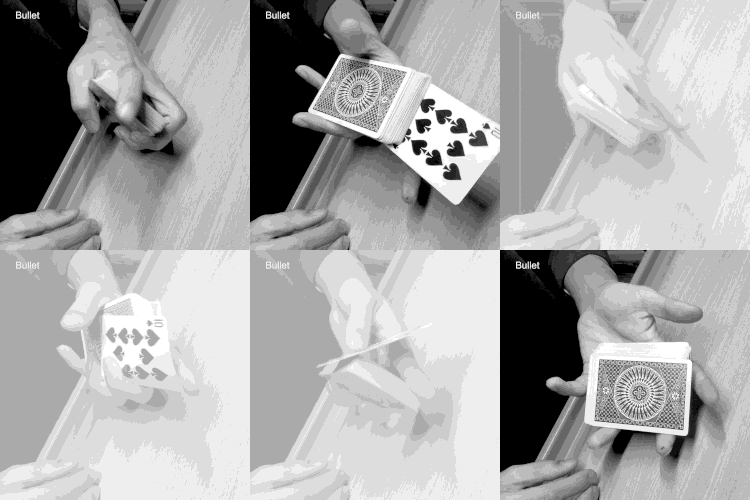
Tracing Touch: Flow×Point, dispersing in T but concentrated in S – e.g. Bullet
Intuitive Touch: Hit×Flare, concentrated in T but dispersing in S – e.g. so-called ‘display’ scenes
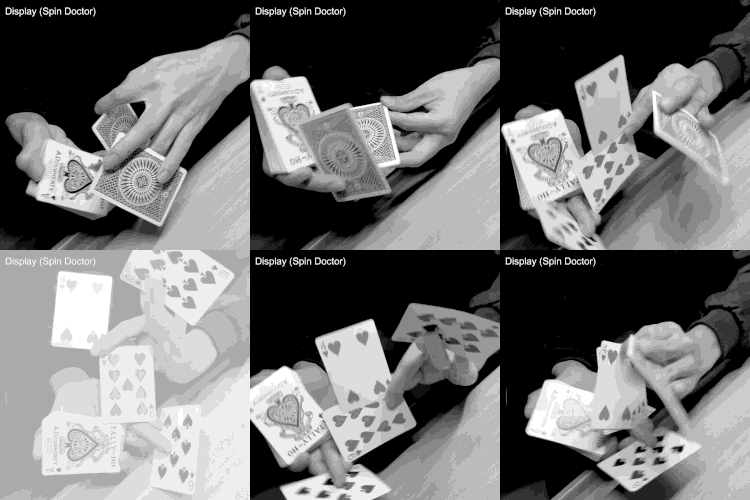
When people say, ‘Your Flow/Hit is great!’, they are commenting on the T aspect in your Touch.
Significantly, a single move can involve more than one Touch.
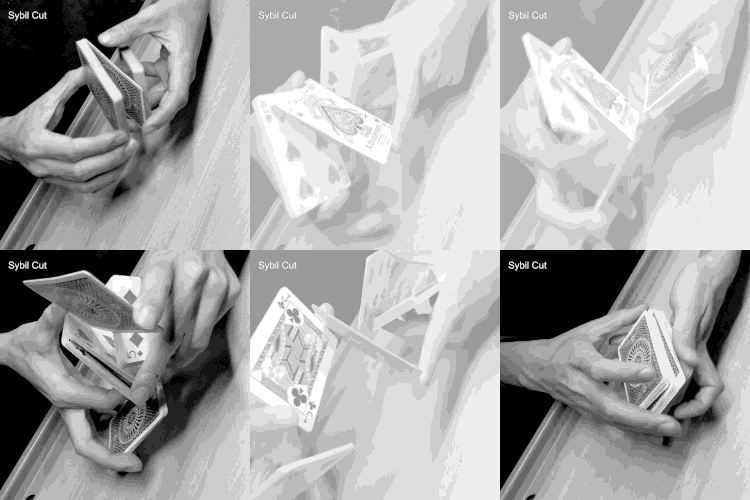
Sybil Cut: moving the second packet from the opener requires a Maximum Touch (Flow×Flare), but the last display part needs an Intuitive Touch (Hit×Flare).
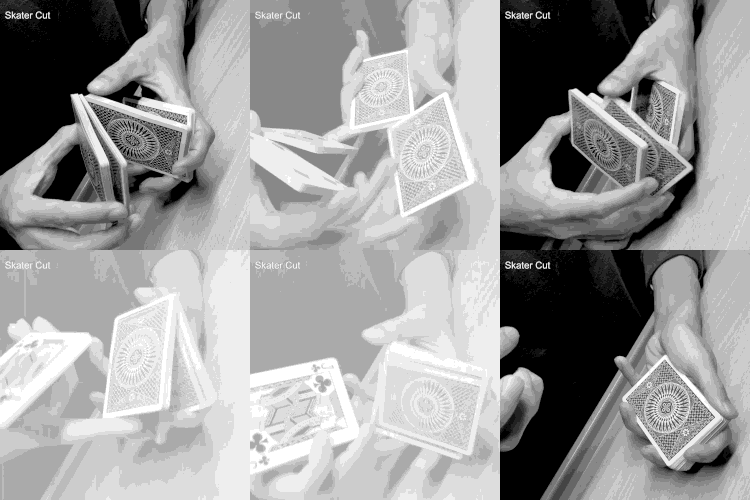
Skater Cut (with Kick Flip): the flip part requires a Minimum Touch (Hit × Point), while the subsequent cut part needs a Maximum Touch (Flow×Flare).
Thus, moves can shift among Touch types in their performance process.
V. Conclusion
Each cardist will interpret these ideas differently. If asked to define these qualities — T/S/D/Cc or Ct/M/E/F — in distinct words, I could not do it perfectly. They are abstract qualities within the mind. To demonstrate them concretely, one must perform a specific move, saying, ‘For me, -ity/-ion/-ness has meaning like this’.
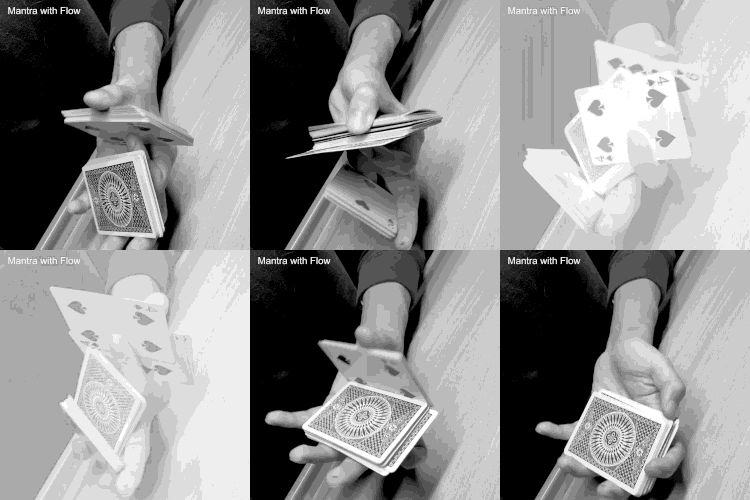
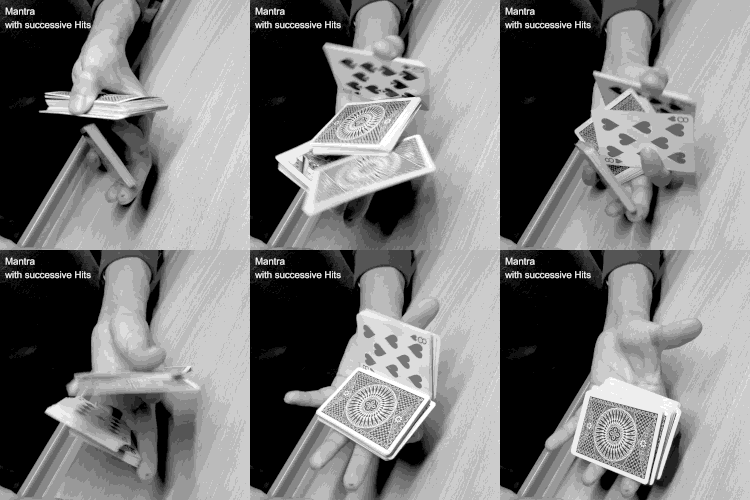
The same goes for Touch; each move’s Touch depends on how you feel it. For instance, about Mantra, opinions might split — some see it as a flowing, unified piece (Maximum Touch = Flow×Flare), while others view it as a series of Hits (Intuitive Touch = Hit×Flare), in step with the signature movement of a single card.
There is no single ‘correct’ Touch for each move. The examples I gave above are just my interpretations. What matters is that these concepts help us think about what we are symbolising through our handling of cards.
In the end, these are just one logical framework — not a complete explanation of everything in cardistry. Still, at least it is an evident and unquestionable fact that such consciousness exists within us, and that cardistry attempts to symbolise it through cards. When we perform, all we have to do is represent the Touch we feel necessary in the way that feels right to ourselves.
If this essay helps you enhance your move creation, performance and Touch — that is the real success for me.
Thank you for reading!
About the author, Soma Kinoshita:
Soma Kinoshita (also known as Soki) is a cardist based in Tokyo. He has been doing cardistry since 2017. He majors in literature at university, with a particular interest in criticism, and is presently attempting to connect it with cardistry. You can find him on Instagram @so_ki274289.
Liked what you read? Tell us why in the comments!